
How to Start a Direct Primary Care Practice, Step by Step
Starting a direct primary care (DPC) practice comes down to eleven steps. In roughly this order, you decide your model and who you serve, run the numbers, check your state's rules, make your Medicare decision, set up your entity and malpractice coverage, find space, set your prices, choose a small tech stack, line up wholesale labs and medications, market to your first patients, and open the doors. Most founders give themselves about six months for the whole path, and the legal pieces have the longest lead times, so they go first.
DPC means patients pay you a flat monthly membership for primary care instead of you billing their insurance for each visit. It's a simpler business than a fee-for-service clinic, but "simpler" doesn't mean easy. This guide walks through each step honestly, including the parts that take longer than people expect, and links to a deeper guide for every one of them.
Before you commit: the model and the math
The first two steps happen at your kitchen table, long before you sign anything. They're the cheapest steps to get right and the most expensive to get wrong.
Step 1. Decide your model and who you serve
Start by picturing the practice you want in two years. Are you a solo doctor with a small panel who wants to know every patient by name, or do you want to add an NP and grow into a group? Will you see children, adults, families, or a mix? Do you want employer contracts, or mostly individual members?
These answers shape everything after them. A pediatric DPC needs different vaccines, scheduling and pricing than an adult-only practice. A doctor who wants a small, deep panel prices higher and needs fewer members to break even. A doctor who wants to serve working families and local employers prices lower and needs more members. Neither is better. They're just different businesses.
It also helps to decide early whether you're going pure DPC (no insurance billing at all) or a hybrid that still bills some insurance. Pure DPC keeps your back office tiny. Hybrid gives you a bridge while the panel grows, but it brings back the coding, claims and billing staff that many doctors leave employed medicine to escape.
If you're currently employed, read your contract now, before you tell anyone your plans. Non-compete clauses, notice periods and tail coverage costs can move your timeline by months. We cover those in leaving employed medicine for DPC.
Step 2. Run the numbers
A DPC business plan doesn't need to be a 40-page document, but it does need three honest numbers. The first is what you need to take home each month to live. The second is what the practice costs to run each month (rent, malpractice, software, supplies, staff if any). The third is your average monthly revenue per member, after card processing fees.
Add your living costs and practice costs together, divide by revenue per member, and you have the number of members you need to break even. Then ask the harder question, which is how many months it will take to get there and how you'll pay your bills in the meantime. Many founders keep part-time clinical work (urgent care shifts, locums, telehealth) for the first year so they aren't forced to rush the panel.
Build your plan around the panel you'll have in month six, not the panel you hope to have in year three. If the practice works at that early size, everything after it is upside.
Our DPC business plan guide has a simple model you can fill in, and DPC startup costs covers the one-time spending before you open.
The legal and business setup
Steps 3 to 5 are the paperwork that makes your practice real. None of them are hard, but each has a lead time, and you want them done before you spend serious money on space.
Step 3. Check your state's DPC rules
The biggest legal question for DPC is whether your state could treat a monthly membership as an insurance product. A majority of states have passed laws or regulations saying a properly structured DPC agreement is not insurance, and the DPC Coalition keeps a current map of which ones. Some of those laws come with requirements, such as specific language in your patient agreement or limits on what the membership can cover.
Beyond the DPC statute, check your state's rules on physician dispensing (if you plan to sell medications in the office), the corporate practice of medicine (which affects who can own the practice), and any rules for NPs and PAs working with you. These vary a lot from state to state.
Start with DPC laws by state, then book an hour with a healthcare attorney who has worked with DPC practices before. That hour is one of the best investments in this whole list, because they'll review your patient agreement too.
Step 4. Make your Medicare decision
If you'll see anyone 65 or older, you need a plan for Medicare. Under CMS rules, a doctor who opts out of Medicare files an affidavit with their Medicare Administrative Contractor and signs a private contract with each Medicare patient they treat. The opt-out lasts two years and, for affidavits filed since mid-2015, renews automatically every two years unless you cancel in writing at least 30 days before the period ends. While opted out, neither you nor your patient can bill Medicare for your services.
Opting out isn't the only path. Some DPC doctors stay enrolled in Medicare, and some simply don't take patients on Medicare. Each choice affects how you can charge those patients and what else they can do with their Medicare benefits, so this is a decision to make with care and with an attorney who knows the rules. Our Medicare and DPC guide lays out the options side by side.
Medicare timing matters. File any opt-out affidavit well before you start seeing Medicare patients under your DPC agreement, and check the current rules on the CMS site before you file.
Step 5. Form your entity, and get malpractice and business insurance
Most DPC doctors form a professional entity, often a PLLC or a professional corporation, depending on what their state allows for physicians. Your attorney or accountant can tell you which fits and how you'll be taxed. Once the entity exists, get an EIN from the IRS, open a business bank account, and keep practice money separate from personal money from day one.
Shop malpractice coverage with a few carriers and tell them you're opening a DPC with a smaller panel, since quotes vary by state, specialty, patient volume and policy type. Ask whether the policy is claims-made (which needs tail coverage if you ever leave) or occurrence-based, and if you're leaving a job, sort out your tail from the old one first. You'll also want general liability insurance, and many landlords require it before you get the keys.
Building the practice
With the legal foundation in place, steps 6 to 9 turn your plan into a clinic patients can join.
Step 6. Find your space
DPC needs less space than you might think. Because you see fewer patients a day and have little or no billing staff, many founders open with one or two exam rooms, a small waiting area and a bathroom. Some start in shared or subleased space inside another practice, a wellness center or an office suite, then move once the panel justifies it.
Before you sign, check zoning for medical use, parking, accessibility, room for a lab draw station and a locked medication cabinet, and whether the lease lets you exit or expand. A short first lease is often worth a slightly higher rent. Our DPC office space guide covers what you really need and what can wait.
Step 7. Set your membership prices
Pricing is where your step 1 decisions become real. Most DPC practices set a monthly fee by age band, with lower prices for children and higher prices for older adults, plus a family cap so a household doesn't pay for every child at full price. Many also charge a one-time enrollment fee, which helps cover the time spent on a new member's first visit and records.
Look at what other DPC clinics near you charge, decide whether you want to be the affordable option or the high-touch one, and write down exactly what the membership includes (visits, messaging, procedures, basic labs) and what costs extra. Clear rules now save awkward conversations later.
One new detail for 2026 is worth pricing around. IRS guidance under the 2025 tax law lets people on a high-deductible health plan keep contributing to an HSA while in a qualifying DPC arrangement, as long as the fees are $150 a month or less for one person, or $300 a month or less for arrangements covering more than one. If many of your future members have HSAs, staying under those limits can make your practice easier to say yes to. Confirm the details with your accountant, then see how to price a DPC membership for tiers, age bands and family plans.
Step 8. Choose a small tech stack
Software is a small step, and it's best kept that way. A new DPC needs an EMR to chart and prescribe, a way to bill memberships every month, a phone and texting tool your patients can reach you on, online scheduling, and e-signature for your patient agreement. Some EMRs bundle membership billing, and some clinics pair a chart with a separate billing platform.
For a sense of cost, published prices in November 2026 (checked on each vendor's site) included Atlas.md at $300 a month per provider with membership billing and dispensing included, Hint's Launch plan at $290 a month for one clinician, Elation's DPC plan at $375 a month per provider, and a free Charm plan for one provider with limits on encounters. Card processing and ePrescribing fees come on top, so ask for a written quote that includes them.
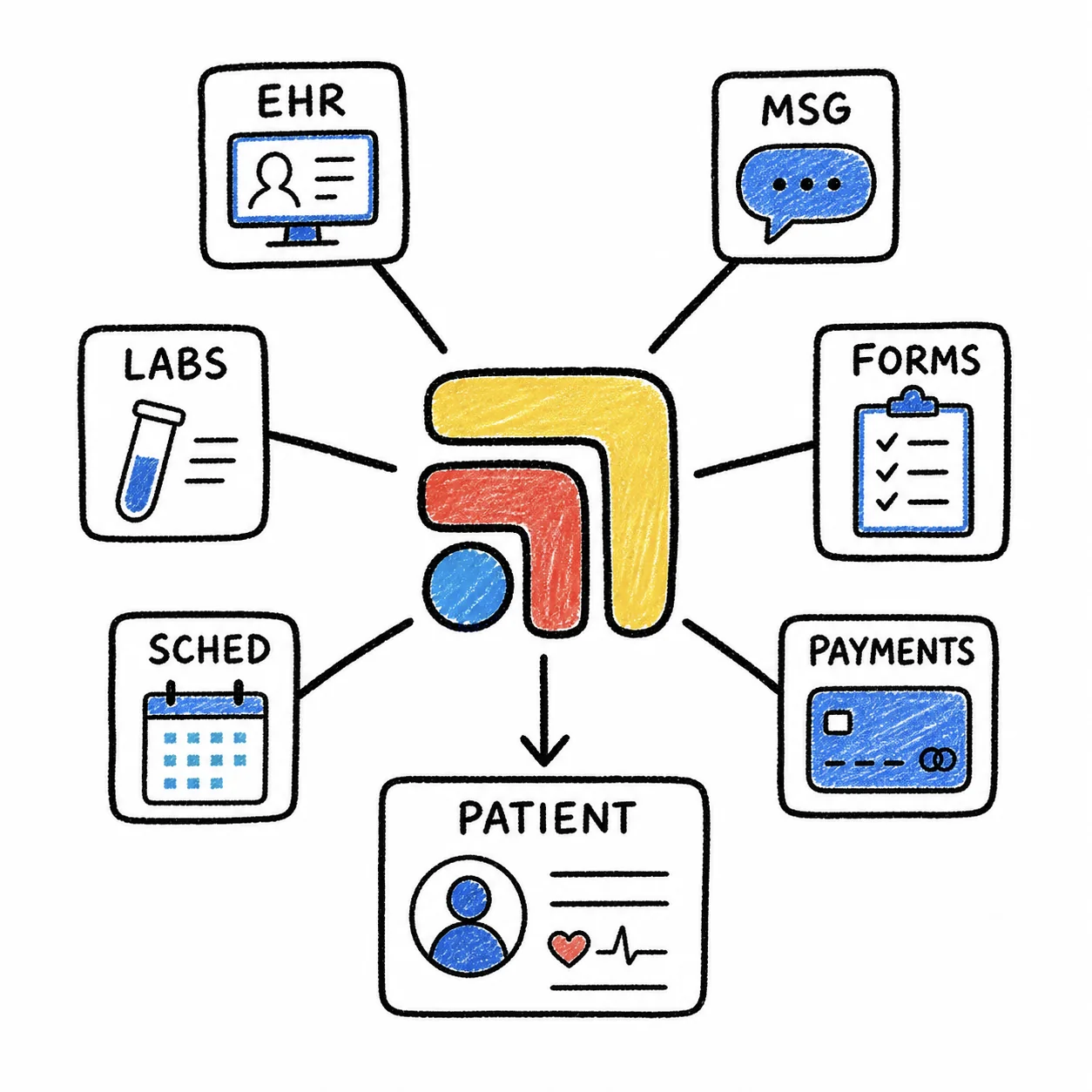
Pick tools you can set up in a few weeks, and don't buy for the 600-member practice you might have someday. The harder part comes later, when patient texts, billing problems, faxes and lab results each live in a different app that was never built to talk to the others. Choosing tools that connect (or at least export cleanly) saves your future self a lot of copying. Some clinics bring in Tabflows for that, a dedicated tech team that connects the tools a clinic already uses.
Step 9. Set up wholesale labs and medications
Wholesale pricing is one of the things patients love most about DPC, and it's a real part of your value. Many DPC practices set up a cash-price account with a reference lab or a regional lab, then pass those low prices on to members. Ask for their direct-pay price list, how specimens are picked up, and how results come back into your EMR.
For medications, some practices dispense common generics in the office at near-wholesale cost, and others send prescriptions to a local cash-friendly pharmacy. In-office dispensing has state rules (some states require a separate dispensing license or registration, and some limit it), plus storage, labeling and inventory work. Check yours in in-office dispensing in DPC before you order your first case of anything.
Filling the panel and opening the doors
The last two steps overlap. Your marketing should start months before opening day, so that day one isn't quiet.
Step 10. Market the practice and find your first patients
Your first members usually come from people who already know you. That includes past patients (within the limits of your old contract), friends, neighbors, your kids' school community, your church or gym, and local business owners. Start a simple website with your prices on it, a Google Business Profile, and a waitlist form months before you open, then tell your story in person as often as you can. Lunch-and-learns for local employers, talks at community groups and open houses in your new space all work because people get to meet you.
The most useful habit is following up. Every person who joins the waitlist, asks a question or visits the open house should hear back quickly and get a clear next step. That's where a lot of early growth quietly leaks, not because anyone did anything wrong, but because the questions arrive in five different places. Our guide to your first 100 DPC patients goes deep on this.
Step 11. Open the doors
Opening day is less of a launch and more of a practice run that counts. In the final weeks, do a full dry run with a friend as a "patient," from signing up online and signing the agreement, through the first card charge, a visit, a lab order, a prescription and a follow-up message. Every step that feels clunky in the dry run will feel ten times clunkier with real members.
Then open with a schedule that leaves room. Your first members will need longer first visits, records requests from their old doctors, and a little hand-holding with the portal. Give yourself that time, and enjoy it. This is the part you built the whole practice for.
A sample timeline to opening day
Every founder's timeline is different, and a non-compete or a build-out can stretch it. This is a realistic six-month version for a solo doctor opening in leased or shared space.
| When | Focus | Key steps |
|---|---|---|
| Month 6 before | Model and money | Steps 1 and 2. Read your contract, draft the plan |
| Month 5 | Legal | Steps 3 and 4. Attorney review, Medicare decision |
| Month 4 | Business setup | Step 5. Entity, EIN, bank, malpractice quotes |
| Month 3 | Space and pricing | Steps 6 and 7. Sign a lease, publish prices |
| Month 2 | Tools and supplies | Steps 8 and 9. Software, labs, medications |
| Month 1 | Patients | Step 10. Waitlist, open house, employer talks |
| Opening week | Go live | Step 11. Dry run, then first members |
For the full month-by-month to-do list, use our DPC launch checklist.
The hard parts, honestly
It would be unfair to make this sound effortless. The hardest part for most founders is the slow first year, when the panel is growing but the income hasn't caught up yet. Planning for that with savings, part-time work or a lower personal draw is what lets you stay patient instead of panicking.
The second hard part is doing every job yourself at the start. You're the doctor, the front desk, the billing department and the marketing team, all at once. That's normal, and it gets better as the panel grows and you can hire help. The tools you choose matter here, too, because the more of your day they handle (reminders, failed card retries, refill requests), the more of it goes back to patients.
The third is uncertainty. You'll make some decisions without a perfect answer, and that's fine. Most choices in this list can be adjusted later. Your prices, your space and your software can all change as you learn. The decisions worth slowing down for are the legal ones (your state's rules, Medicare and your entity), because those are the hardest to undo.
Where to go next
If you're just starting to think about DPC, begin with how much it costs to start and the business plan, because the numbers will tell you how much runway you need. If you've already decided, open the 6-month launch checklist and start at the top. Either way, take it one step at a time. Plenty of doctors have walked this path before you, and the DPC community is generous with advice.
The part most guides skip
Every tool in a DPC clinic is good at its own job, and none of them were built to talk to each other. A patient text turns into a refill in the chart, which needs a review, which needs a reply, and the follow-up lives in someone's head. That isn't anyone's fault. The tools just don't share a to-do list.
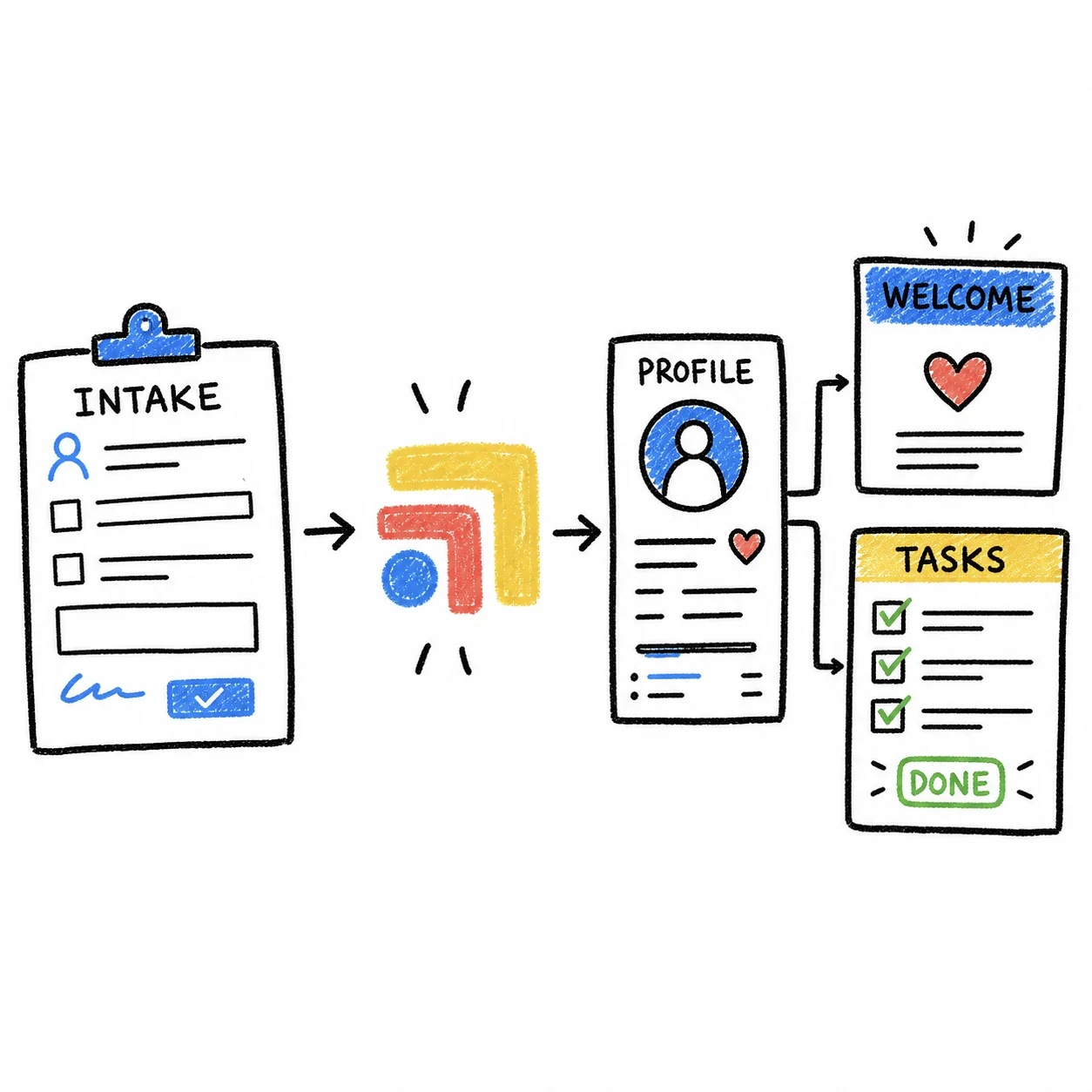
That's the job Tabflows does. Tabflows is a dedicated tech team for DPC clinics. We connect the tools you already chose and give your team one place for chat, tasks and patient context, with managed workflows for the repeat work like refills, lab follow-ups and onboarding. You keep every tool you picked.
Frequently asked questions
How long does it take to start a direct primary care practice?
Most founders give themselves about six months from the decision to opening day, and more if they have a non-compete, a build-out or a long notice period. The legal and Medicare pieces have fixed lead times, so start those first. Our 6-month launch checklist lays it out month by month.
Do I have to opt out of Medicare to start a DPC?
No. Opting out is one option, and it means signing a private contract with each Medicare patient and not billing Medicare for two years at a time. Some DPC doctors stay enrolled or see no Medicare patients at all. Read Medicare and DPC and confirm your plan with a healthcare attorney.
Is direct primary care legal in every state?
DPC operates across the country, and a majority of states have passed laws or rules saying a DPC membership is not insurance (the DPC Coalition keeps a current map). The details still vary by state, so check yours in DPC laws by state and with a local healthcare attorney.
How much money do I need to start a DPC?
It depends mostly on space, build-out and how long you need to cover your own living costs while the panel grows. A lean micro-practice costs far less than a fully built clinic. Our DPC startup costs guide walks through every line item.
Can patients use an HSA with direct primary care?
Starting January 1, 2026, IRS guidance lets people on a high-deductible plan keep contributing to an HSA while in a qualifying DPC arrangement, as long as the fees stay at or under $150 a month for one person or $300 a month for more than one. Price your plans with those limits in mind.