
In-Office Dispensing in DPC: How It Works and What to Check in Your State
In-office dispensing means your clinic keeps a small stock of common medications and hands patients their prescription before they leave, instead of sending it to a pharmacy. DPC practices do it because they can buy generic medications at wholesale and pass them on at close to cost, which saves members money and saves everyone a trip. Whether you can do it, and under what license, depends on your state, so confirm the rules with your medical board and board of pharmacy before you order a single bottle.
This guide walks through how dispensing works day to day, why so many DPC founders add it, what to check in your state and how software keeps the inventory honest. State details here were checked in November 2026.
How in-office dispensing works
The flow is simple once it's set up. You see a patient, decide they need a medication you stock, and write the prescription in your EMR as usual. Instead of sending it to a pharmacy, you or a trained team member pulls the medication from your in-office supply, labels it, records what was given, and the patient pays for it (or it's included in their membership) before they walk out.
Behind that short visit are a few moving parts.
- Purchasing. You buy from a licensed wholesale distributor, usually in prepackaged quantities that match common prescriptions.
- Storage. Medications are kept secured, at the right temperature, and organized so expired stock gets pulled.
- Labeling. Each dispensed medication carries a label with the patient, drug, strength, directions and your practice details, following your state's requirements.
- Records. You keep a log of what came in, what went out, to whom, and the lot and expiration dates, so you can answer a recall.
- Pricing and payment. You set a price per medication and collect it, which is easiest when your billing system already knows the patient.
Why DPC clinics dispense
The main reason is the patient's wallet. Many generic medications cost very little at wholesale, and a DPC clinic that passes them through at a small markup can often beat what a member would pay at the pharmacy counter, especially members with high-deductible plans or no insurance. It's one of the most tangible things you can point to when someone asks what their membership really gets them.
It also closes loops. A patient who leaves with their antibiotic or blood pressure medication in hand starts it that day, and you don't have to wonder whether the prescription was ever filled. For your clinic, a modest margin on medications can help cover costs, though most DPC founders treat dispensing as a member benefit first and a revenue line second.
The trade-off is work. Someone has to order, receive, count, check expiration dates and reconcile the shelf with the records. That's real time each week, and it's why software matters more here than in most other parts of a new practice.
Start with a short list of the medications you prescribe most, track how fast each one moves for a few months, and only then expand. A small, fast-moving shelf wastes less to expiration.
State rules: what to check
Physician dispensing is regulated by the states, and the rules range from fairly open to tightly restricted. Some states allow prescribers to dispense under their existing license with labeling and record rules. Others require a separate registration, limit dispensing to certain situations, or restrict it heavily. Because the differences are large, we only name a state here when we checked its rules directly.
Montana is a good example of how this can change. Before 2021, Montana law generally made it unlawful for a medical practitioner to dispense drugs, with limited exceptions. In 2021 the state passed SB 374, which allows practitioners to dispense medications directly to their patients. Today the Montana Board of Pharmacy issues a Medical Practitioner Dispenser registration for practitioners who dispense to their own patients as a regular part of their practice. Eligible applicants include physicians, physician assistants and advanced practice registered nurses with prescriptive authority (along with dentists, optometrists and podiatrists), and they must have a physical dispensing location in Montana. The board points to section 37-2-104 of the Montana Code and its administrative rules for the detailed requirements.
For your own state, get clear answers to these questions.
| Question | Where to ask |
|---|---|
| Can a physician (or NP or PA) dispense at all? | State medical board, board of pharmacy |
| Is a separate dispensing license or registration needed? | Board of pharmacy |
| What must the label say? | Board of pharmacy rules |
| What records must you keep, and for how long? | Board of pharmacy rules |
| Who on your team may hand medications to patients? | Medical and nursing boards |
| Are there limits on controlled substances? | Board of pharmacy, DEA |
| Must patients be told they can use any pharmacy? | Medical board or statute |
Controlled substances deserve extra caution. They bring federal DEA requirements on top of your state's rules, so many DPC clinics keep their in-office supply to non-controlled generics, at least at first. If you plan to dispense anything controlled, have that conversation with a healthcare attorney and your state board before you order.
Dispensing rules are separate from your state's DPC law, which we cover in DPC laws by state. A state can have a friendly DPC statute and strict dispensing rules, or the other way around.
Choosing a wholesaler
You'll buy from licensed wholesale distributors that sell to medical practices. Look for ones that offer prepackaged generics in common quantities, simple online ordering and price lists you can share with members. When you compare them, ask how they verify your license and dispensing registration, which medications they carry in prepackaged form, what shipping and minimum order rules apply, and whether they can provide the lot and expiration details your records need.
Prices change often, so compare a basket of your 20 most-prescribed medications across two or three wholesalers rather than judging by a single drug. Factor in shipping and any minimums, because a cheap list price can disappear in fees on small orders. Medication stock is also a real line in your startup costs, so budget an opening order and plan to restock as you learn what moves.
Software that tracks inventory
Dispensing by spreadsheet works for a week. After that, counts drift, expiration dates get missed and nobody is sure whether the shelf matches the records. The easiest setup is one where your EMR records the prescription, takes the medication out of inventory and charges the patient in the same step.
Two DPC-focused systems build this in, based on their published plans (prices checked on each vendor's site in November 2026).
| Software | Dispensing | Published price |
|---|---|---|
| Atlas.md | In-house pharmacy, "unlimited inventory, unlimited prescriptions, unlimited dispensing" | $300/mo per provider, unlimited patients |
| Hint | "Medication inventory & dispensing" with the EMR | Quote the plan you need on the demo |
Atlas.md is the clearest fit if dispensing is central to your model, since the pharmacy is included at its single per-provider price. Hint lists medication inventory and dispensing as part of its EMR, which suits clinics that also want Hint's membership and employer billing on the same record. For either one, ask to see a full dispensing workflow on the demo, from receiving a shipment to a patient walking out with a labeled bottle, and ask how recalls and expired stock are handled.
If your EMR doesn't handle dispensing, you'll be keeping inventory in a separate tool and reconciling it by hand, which is exactly where counts and charges slip. That's not anyone's fault, because those tools were simply never built to talk to each other.
Our take
In-office dispensing is one of the most visible ways a DPC practice saves members money, and many founders find it worth the setup. Do it in order. Confirm your state's rules with the medical board and board of pharmacy, get any registration you need, start with a short list of fast-moving generics, and pick software that ties the prescription, inventory and payment together. Then add it to your launch checklist so the shelf is stocked and labeled before your first patient arrives.
The part most guides skip
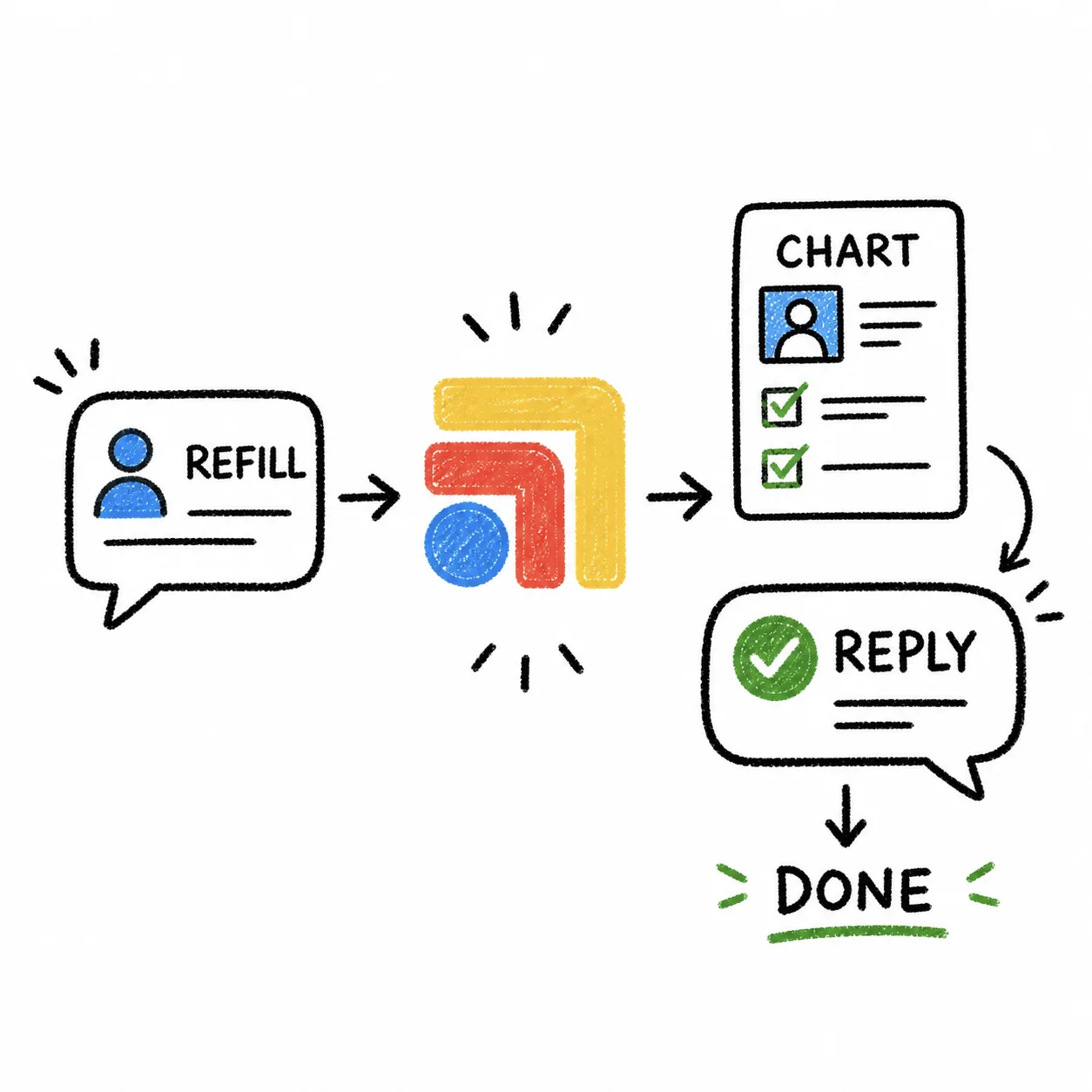
Every tool in a DPC clinic is good at its own job, and none of them were built to talk to each other. A patient text turns into a refill in the chart, which needs a review, which needs a reply, and the follow-up lives in someone's head. That isn't anyone's fault. The tools just don't share a to-do list.
That's the job Tabflows does. Tabflows is a dedicated tech team for DPC clinics. We connect the tools you already chose and give your team one place for chat, tasks and patient context, with managed workflows for the repeat work like refills, lab follow-ups and onboarding. You keep every tool you picked.
Frequently asked questions
Can a DPC doctor dispense medications from the office?
In many states, yes, but it depends entirely on your state. Some states restrict physician dispensing or require a separate registration first. Montana, for example, requires a Medical Practitioner Dispenser registration from its Board of Pharmacy. Check with your state medical board and board of pharmacy before you buy any stock.
Where do DPC clinics buy medications to dispense?
Usually from licensed wholesale distributors that sell to medical practices, often prepackaged generics in common quantities. Ask each one for its account requirements, which typically include your license and your state dispensing registration if your state requires one.
Which DPC software handles dispensing and inventory?
Atlas.md includes an in-house pharmacy with what it publishes as "unlimited inventory, unlimited prescriptions, unlimited dispensing" on its $300 a month per provider plan. Hint lists medication inventory and dispensing as part of its EMR. Confirm the workflow on a demo before you commit.
Do I need a license to dispense medications in my practice?
It depends on the state. Some states let licensed prescribers dispense under their existing license with record-keeping and labeling rules, while others require a separate dispensing registration or limit dispensing to narrow situations. Your state board of pharmacy is the place to confirm.